

The Harsh Truths of AI Adoption
MITs State of AI in Business report revealed that while 40% of organizations have purchased enterprise LLM subscriptions, over 90% of employees are actively using AI tools in their daily work. Similarly, research from Harmonic Security found that 45.4% of sensitive AI interactions are coming from personal email accounts, where employees are bypassing corporate controls entirely.
This has, understandably, led to plenty of concerns around a growing “Shadow AI Economy”. But what does that mean and how can security and AI governance teams overcome these challenges?
AI Usage Is Driven by Employees, Not Committees
Enterprises incorrectly view AI use as something that comes top-down, defined by their own visionary business leaders. We now know that’s wrong. In most cases, employees are driving adoption from the bottom up, often without oversight, while governance frameworks are still being defined from the top down. Even if they have enterprise-sanctioned tools, they are often eschewing these in favor of other newer tools that are better-placed to improve their productivity.
Unless security leaders understand this reality, uncover and govern this activity, they are exposing the business to significant risks.
Why Blocking Fails
Many organizations have tried to meet this challenge with a “block and wait” strategy. This approach seeks to restrict access to well-known AI platforms and hope adoption slows.
The reality is different.
AI is no longer a category that can be easily fenced off. From productivity apps like Canva and Grammarly to collaboration tools with embedded assistants, AI is woven into nearly every SaaS app. Blocking one tool only drives employees to another, often through personal accounts or home devices, leaving the enterprise blind to real usage.
This is not the case for all enterprises, of course. Forward-leaning security and AI governance teams are looking to proactively understand what employees are using and for what use cases. They seek to understand what is happening and how to help their employees use the tools as securely as possible.
Shadow AI Discovery as a Governance Imperative
An AI asset inventory is a regulatory requirement and not a nice-to-have. Frameworks like the EU AI Act explicitly mandate organizations to maintain visibility into the AI systems in use, because without discovery there is no inventory, and without an inventory there can be no governance. Shadow AI is a key component of this.
Different AI tools pose different risks. Some may quietly train on proprietary data, others may store sensitive information in jurisdictions like China, creating intellectual property exposure. To comply with regulations and protect the business, security leaders must first uncover the full scope of AI usage, spanning sanctioned enterprise accounts and unsanctioned personal ones.
Once armed with this visibility, organizations can separate low-risk use cases from those involving sensitive data, regulated workflows, or geographic exposure. Only then can they enforce meaningful governance policies that both protect data and enable employee productivity.
How Harmonic Security Helps
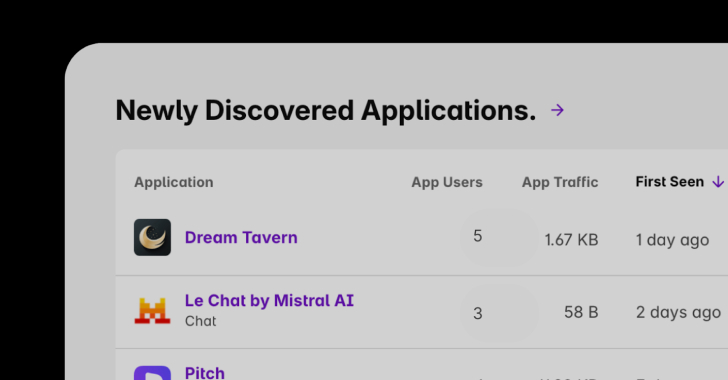
Harmonic Security enables this approach by delivering intelligence controls for employee use of AI. This includes continuous monitoring of Shadow AI, with off-the-shelf risk assessments for each application.
Instead of relying on static block lists, Harmonic provides visibility into both sanctioned and unsanctioned AI use, then applies smart policies based on the sensitivity of the data, the role of the employee, and the nature of the tool.
That means a marketing team might be permitted to put specific information into specific tools for content creation, while HR or legal teams are restricted from using personal accounts for sensitive employee information. This is underpinned by models that can identify and classify information as employees share the data. This enables teams to enforce AI policies with the necessary precision.
The Path Forward
Shadow AI is here to stay. As more SaaS applications embed AI, unmanaged use will only expand. Organizations that fail to address discovery today will find themselves unable to govern tomorrow.
The path forward is to govern it intelligently, rather than block it. Shadow AI discovery gives CISOs the visibility they need to protect sensitive data, meet regulatory requirements, and empower employees to safely take advantage of AI’s productivity benefits.
Harmonic Security is already helping enterprises take this next step in AI governance.
For CISOs, it’s no longer a question of whether employees are using Shadow AI…it’s whether you can see it.

