Close Menu
  • Home
  • News
  • Cyber Security
  • Internet of Things
  • Tips and Advice

Subscribe to Updates

Get the latest creative news from FooBar about art, design and business.

What's Hot

CERT Polska Details Coordinated Cyber Attacks on 30+ Wind and Solar Farms

February 7, 2026

Researchers Uncover Chrome Extensions Abusing Affiliate Links and Stealing ChatGPT Access

February 7, 2026

China-Linked UAT-8099 Targets IIS Servers in Asia with BadIIS SEO Malware

February 7, 2026
Facebook X (Twitter) Instagram
Saturday, February 7
Facebook X (Twitter) Instagram Pinterest Vimeo
Cyberwire Daily
  • Home
  • News
  • Cyber Security
  • Internet of Things
  • Tips and Advice
Cyberwire Daily
Home»News»CISA Flags TP-Link Router Flaws CVE-2023-50224 and CVE-2025-9377 as Actively Exploited
News

CISA Flags TP-Link Router Flaws CVE-2023-50224 and CVE-2025-9377 as Actively Exploited

Team-CWDBy Team-CWDSeptember 12, 2025No Comments2 Mins Read
Share Facebook Twitter Pinterest LinkedIn Tumblr Reddit Telegram Email
Share
Facebook Twitter LinkedIn Pinterest Email


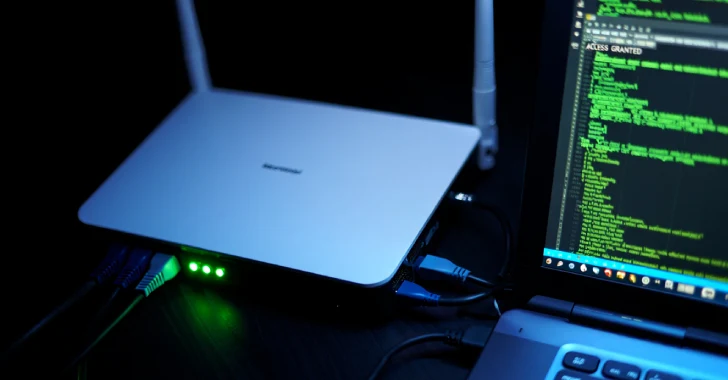
The U.S. Cybersecurity and Infrastructure Security Agency (CISA) on Wednesday added two security flaws impacting TP-Link wireless routers to its Known Exploited Vulnerabilities (KEV) catalog, noting that there is evidence of them being exploited in the wild.

The vulnerabilities in question are listed below –

  • CVE-2023-50224 (CVSS score: 6.5) – An authentication bypass by spoofing vulnerability within the httpd service of TP-Link TL-WR841N, which listens on TCP port 80 by default, leading to the disclosure of stored credentials in “/tmp/dropbear/dropbearpwd”
  • CVE-2025-9377 (CVSS score: 8.6) – An operating system command injection vulnerability in TP-Link Archer C7(EU) V2 and TL-WR841N/ND(MS) V9 that could lead to remote code execution

According to information listed on the company’s website, the following router models have reached end-of-life (EoL) status –

  • TL-WR841N (versions 10.0 and 11.0)
  • TL-WR841ND (version 10.0)
  • Archer C7 (versions 2.0 and 3.0)

However, TP-Link has released firmware updates for the two vulnerabilities as of November 2024 owing to malicious exploitation activity.

“The affected products have reached their End-of-Service (EOS) and are no longer receiving active support, including security updates,” the company said. “For enhanced protection, we recommend that customers upgrade to newer hardware to ensure optimal performance and security.”

There are no public reports explicitly referencing the exploitation of the aforementioned vulnerabilities, but TP-Link, in an advisory updated last week, linked in-the-wild activity to a botnet known as Quad7 (aka CovertNetwork-1658), which has been leveraged by a China-linked threat actor codenamed Storm-0940 to conduct highly evasive password spray attacks.

In light of active exploitation, Federal Civilian Executive Branch (FCEB) agencies are being urged to apply the necessary mitigations by September 24, 2025, to secure their networks.

The development comes a day after CISA placed another high-severity security flaw impacting TP-Link TL-WA855RE Wi-Fi Ranger Extender products (CVE-2020-24363, CVSS score: 8.8) to its Known Exploited Vulnerabilities (KEV) catalog, citing evidence of active exploitation.


Source

computer security cyber attacks cyber news cyber security news cyber security news today cyber security updates cyber updates data breach hacker news hacking news how to hack information security network security ransomware malware software vulnerability the hacker news
Share. Facebook Twitter Pinterest LinkedIn Tumblr Email
Previous ArticleAxios User Agent Helps Automate Phishing on “Unprecedented Scale”
Next Article Google Fined $379 Million by French Regulator for Cookie Consent Violations
Team-CWD
  • Website

Related Posts

News

CERT Polska Details Coordinated Cyber Attacks on 30+ Wind and Solar Farms

February 7, 2026
News

Researchers Uncover Chrome Extensions Abusing Affiliate Links and Stealing ChatGPT Access

February 7, 2026
News

China-Linked UAT-8099 Targets IIS Servers in Asia with BadIIS SEO Malware

February 7, 2026
Add A Comment
Leave A Reply Cancel Reply

Latest News

North Korean Hackers Turn JSON Services into Covert Malware Delivery Channels

November 24, 202522 Views

macOS Stealer Campaign Uses “Cracked” App Lures to Bypass Apple Securi

September 7, 202517 Views

North Korean Hackers Exploit Threat Intel Platforms For Phishing

September 7, 20256 Views

U.S. Treasury Sanctions DPRK IT-Worker Scheme, Exposing $600K Crypto Transfers and $1M+ Profits

September 5, 20256 Views

Ukrainian Ransomware Fugitive Added to Europe’s Most Wanted

September 11, 20255 Views
Stay In Touch
  • Facebook
  • YouTube
  • TikTok
  • WhatsApp
  • Twitter
  • Instagram
Most Popular

North Korean Hackers Turn JSON Services into Covert Malware Delivery Channels

November 24, 202522 Views

macOS Stealer Campaign Uses “Cracked” App Lures to Bypass Apple Securi

September 7, 202517 Views

North Korean Hackers Exploit Threat Intel Platforms For Phishing

September 7, 20256 Views
Our Picks

When ‘hacking’ your game becomes a security risk

October 17, 2025

What is it, and how do I get it off my device?

September 11, 2025

Watch out for SVG files booby-trapped with malware

September 22, 2025

Subscribe to Updates

Get the latest news from cyberwiredaily.com

Facebook X (Twitter) Instagram Pinterest
  • Home
  • Contact
  • Privacy Policy
  • Terms of Use
  • California Consumer Privacy Act (CCPA)
© 2026 All rights reserved.

Type above and press Enter to search. Press Esc to cancel.