Close Menu
  • Home
  • News
  • Cyber Security
  • Internet of Things
  • Tips and Advice

Subscribe to Updates

Get the latest creative news from FooBar about art, design and business.

What's Hot

China-Linked UAT-8099 Targets IIS Servers in Asia with BadIIS SEO Malware

February 7, 2026

Badges, Bytes and Blackmail

February 7, 2026

Ex-Google Engineer Convicted for Stealing AI Secrets for China Startup

February 7, 2026
Facebook X (Twitter) Instagram
Saturday, February 7
Facebook X (Twitter) Instagram Pinterest Vimeo
Cyberwire Daily
  • Home
  • News
  • Cyber Security
  • Internet of Things
  • Tips and Advice
Cyberwire Daily
Home»News»LastPass Warns of Fake Repositories Infecting macOS with Atomic Infostealer
News

LastPass Warns of Fake Repositories Infecting macOS with Atomic Infostealer

Team-CWDBy Team-CWDSeptember 29, 2025No Comments2 Mins Read
Share Facebook Twitter Pinterest LinkedIn Tumblr Reddit Telegram Email
Share
Facebook Twitter LinkedIn Pinterest Email


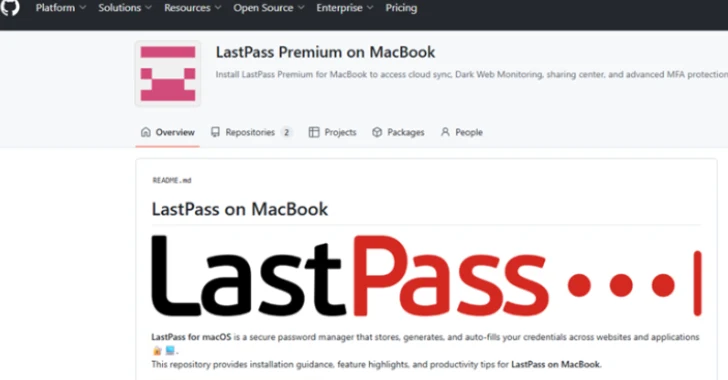
LastPass is warning of an ongoing, widespread information stealer campaign targeting Apple macOS users through fake GitHub repositories that distribute malware-laced programs masquerading as legitimate tools.

“In the case of LastPass, the fraudulent repositories redirected potential victims to a repository that downloads the Atomic infostealer malware,” researchers Alex Cox, Mike Kosak, and Stephanie Schneider from the LastPass Threat Intelligence, Mitigation, and Escalation (TIME) team said.

Beyond LastPass, some of the popular tools impersonated in the campaign include 1Password, Basecamp, Dropbox, Gemini, Hootsuite, Notion, Obsidian, Robinhood, Salesloft, SentinelOne, Shopify, Thunderbird, and TweetDeck, among others. All the GiHub repositories are designed to target macOS systems.

The attacks involve the use of Search Engine Optimization (SEO) poisoning to push links to malicious GitHub sites on top of search results on Bing and Google, which then instruct users to download the program by clicking the “Install LastPass on MacBook” button, redirecting them a GitHub page domain.

“The GitHub pages appear to be created by multiple GitHub usernames to get around takedowns,” LastPass said.

The GitHub page is designed to take the user to another domain that provides ClickFix-style instructions to copy and execute a command on the Terminal app, resulting in the deployment of the Atomic Stealer malware.

It’s worth noting similar campaigns have been previously leveraged malicious sponsored Google Ads for Homebrew to distribute a multi-stage dropper through a bogus GitHub repository that can run detect virtual machines or analysis environments, and decode and execute system commands to establish connection with a remote server, per security researcher Dhiraj Mishra.

In recent weeks, threat actors have been spotted leveraging public GitHub repositories to host malicious payloads and distribute them via Amadey, as well as employ dangling commits corresponding to an official GitHub repository to redirect unwitting users to malicious programs.

Update

Malwarebytes, in a follow-up report published on September 23, 2025, said the campaign has also employed GitHub repositories to host fake versions of its own software to target Mac users with the Atomic Stealer malware.

“Impersonating brands is sadly commonplace, as scammers take advantage of established brand names to target their victims,” the company said. “In this case, the cybercriminals’ goal is to distribute information stealers.”


Source

computer security cyber attacks cyber news cyber security news cyber security news today cyber security updates cyber updates data breach hacker news hacking news how to hack information security network security ransomware malware software vulnerability the hacker news
Share. Facebook Twitter Pinterest LinkedIn Tumblr Email
Previous ArticleDutch Authorities Arrest Teens in Foreign Interference Case
Next Article AI-Generated Code Used in Phishing Campaign Blocked by Microsoft
Team-CWD
  • Website

Related Posts

News

China-Linked UAT-8099 Targets IIS Servers in Asia with BadIIS SEO Malware

February 7, 2026
News

Badges, Bytes and Blackmail

February 7, 2026
News

Ex-Google Engineer Convicted for Stealing AI Secrets for China Startup

February 7, 2026
Add A Comment
Leave A Reply Cancel Reply

Latest News

North Korean Hackers Turn JSON Services into Covert Malware Delivery Channels

November 24, 202522 Views

macOS Stealer Campaign Uses “Cracked” App Lures to Bypass Apple Securi

September 7, 202517 Views

North Korean Hackers Exploit Threat Intel Platforms For Phishing

September 7, 20256 Views

U.S. Treasury Sanctions DPRK IT-Worker Scheme, Exposing $600K Crypto Transfers and $1M+ Profits

September 5, 20256 Views

Ukrainian Ransomware Fugitive Added to Europe’s Most Wanted

September 11, 20255 Views
Stay In Touch
  • Facebook
  • YouTube
  • TikTok
  • WhatsApp
  • Twitter
  • Instagram
Most Popular

North Korean Hackers Turn JSON Services into Covert Malware Delivery Channels

November 24, 202522 Views

macOS Stealer Campaign Uses “Cracked” App Lures to Bypass Apple Securi

September 7, 202517 Views

North Korean Hackers Exploit Threat Intel Platforms For Phishing

September 7, 20256 Views
Our Picks

What it is and how to protect yourself

January 8, 2026

Here’s what you should know

February 6, 2026

When ‘hacking’ your game becomes a security risk

October 17, 2025

Subscribe to Updates

Get the latest news from cyberwiredaily.com

Facebook X (Twitter) Instagram Pinterest
  • Home
  • Contact
  • Privacy Policy
  • Terms of Use
  • California Consumer Privacy Act (CCPA)
© 2026 All rights reserved.

Type above and press Enter to search. Press Esc to cancel.