Close Menu
  • Home
  • News
  • Cyber Security
  • Internet of Things
  • Tips and Advice

Subscribe to Updates

Get the latest creative news from FooBar about art, design and business.

What's Hot

China-Linked Ink Dragon Hacks Governments Using ShadowPad and FINALDRAFT Malware

December 26, 2025

GhostPoster Malware Found in 17 Firefox Add-ons with 50,000+ Downloads

December 26, 2025

Compromised IAM Credentials Power a Large AWS Crypto Mining Campaign

December 26, 2025
Facebook X (Twitter) Instagram
Friday, December 26
Facebook X (Twitter) Instagram Pinterest Vimeo
Cyberwire Daily
  • Home
  • News
  • Cyber Security
  • Internet of Things
  • Tips and Advice
Cyberwire Daily
Home»News»NANOREMOTE Malware Uses Google Drive API for Hidden Control on Windows Systems
News

NANOREMOTE Malware Uses Google Drive API for Hidden Control on Windows Systems

Team-CWDBy Team-CWDDecember 21, 2025No Comments3 Mins Read
Share Facebook Twitter Pinterest LinkedIn Tumblr Reddit Telegram Email
Share
Facebook Twitter LinkedIn Pinterest Email


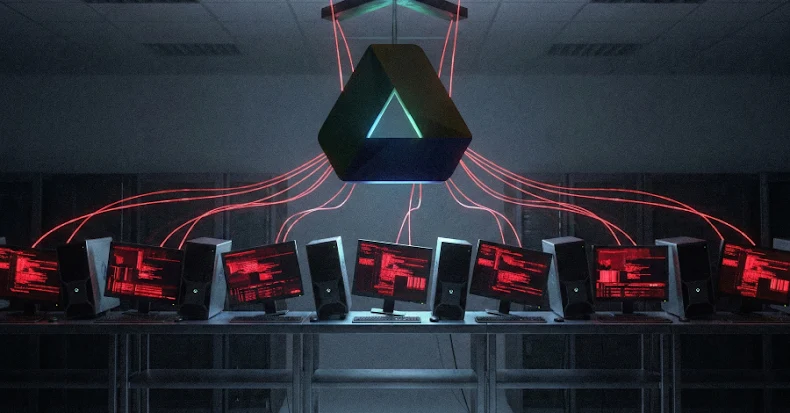
Cybersecurity researchers have disclosed details of a new fully-featured Windows backdoor called NANOREMOTE that uses the Google Drive API for command-and-control (C2) purposes.

According to a report from Elastic Security Labs, the malware shares code similarities with another implant codenamed FINALDRAFT (aka Squidoor) that employs Microsoft Graph API for C2. FINALDRAFT is attributed to a threat cluster known as REF7707 (aka CL-STA-0049, Earth Alux, and Jewelbug).

“One of the malware’s primary features is centered around shipping data back and forth from the victim endpoint using the Google Drive API,” Daniel Stepanic, principal security researcher at Elastic Security Labs, said.

“This feature ends up providing a channel for data theft and payload staging that is difficult for detection. The malware includes a task management system used for file transfer capabilities that include queuing download/upload tasks, pausing/resuming file transfers, canceling file transfers, and generating refresh tokens.”

REF7707 is believed to be a suspected Chinese activity cluster that has targeted governments, defense, telecommunication, education, and aviation sectors in Southeast Asia and South America as far back as March 2023, per Palo Alto Networks Unit 42. In October 2025, Broadcom-owned Symantec attributed the hacking group to a five-month-long intrusion targeting a Russian IT service provider.

The exact initial access vector used to deliver NANOREMOTE is currently not known. However, the observed attack chain includes a loader named WMLOADER that mimics Bitdefender’s crash handling component (“BDReinit.exe”) and decrypts shellcode responsible for launching the backdoor.

Written in C++, NANOREMOTE is equipped to perform reconnaissance, execute files and commands, and transfer files to and from victim environments using the Google Drive API. It’s also preconfigured to communicate with a hard-coded, non-routable IP address over HTTP to process requests sent by the operator and send the response back.

“These requests occur over HTTP where the JSON data is submitted through POST requests that are Zlib compressed and encrypted with AES-CBC using a 16-byte key (558bec83ec40535657833d7440001c00),” Elastic said. “The URI for all requests use /api/client with User-Agent (NanoRemote/1.0).”

Cybersecurity

Its primary functionality is realized through a set of 22 command handlers that allow it to collect host information, carry out file and directory operations, run portable executable (PE) files already present on disk, clear cache, download/upload files to Google Drive, pause/resume/cancel data transfers, and terminate itself.

Elastic said it identified an artifact (“wmsetup.log“) uploaded to VirusTotal from the Philippines on October 3, 2025, that’s capable of being decrypted by WMLOADER with the same 16-byte key to reveal a FINALDRAFT implant, indicating that the two malware families are likely the work of the same threat actor. It’s unclear as to why the same hard-coded key is being used across both of them.

“Our hypothesis is that WMLOADER uses the same hard-coded key due to being part of the same build/development process that allows it to work with various payloads,” Stepanic said. “This appears to be another strong signal suggesting a shared codebase and development environment between FINALDRAFT and NANOREMOTE.”


Source

computer security cyber attacks cyber news cyber security news cyber security news today cyber security updates cyber updates data breach hacker news hacking news how to hack information security network security ransomware malware software vulnerability the hacker news
Share. Facebook Twitter Pinterest LinkedIn Tumblr Email
Previous ArticleThe Impact of Robotic Process Automation (RPA) on Identity and Access Management
Next Article Spyware Alerts, Mirai Strikes, Docker Leaks, ValleyRAT Rootkit — and 20 More Stories
Team-CWD
  • Website

Related Posts

News

China-Linked Ink Dragon Hacks Governments Using ShadowPad and FINALDRAFT Malware

December 26, 2025
News

GhostPoster Malware Found in 17 Firefox Add-ons with 50,000+ Downloads

December 26, 2025
News

Compromised IAM Credentials Power a Large AWS Crypto Mining Campaign

December 26, 2025
Add A Comment
Leave A Reply Cancel Reply

Latest News

North Korean Hackers Turn JSON Services into Covert Malware Delivery Channels

November 24, 202521 Views

macOS Stealer Campaign Uses “Cracked” App Lures to Bypass Apple Securi

September 7, 202517 Views

North Korean Hackers Exploit Threat Intel Platforms For Phishing

September 7, 20256 Views

U.S. Treasury Sanctions DPRK IT-Worker Scheme, Exposing $600K Crypto Transfers and $1M+ Profits

September 5, 20256 Views

Ukrainian Ransomware Fugitive Added to Europe’s Most Wanted

September 11, 20255 Views
Stay In Touch
  • Facebook
  • YouTube
  • TikTok
  • WhatsApp
  • Twitter
  • Instagram
Most Popular

North Korean Hackers Turn JSON Services into Covert Malware Delivery Channels

November 24, 202521 Views

macOS Stealer Campaign Uses “Cracked” App Lures to Bypass Apple Securi

September 7, 202517 Views

North Korean Hackers Exploit Threat Intel Platforms For Phishing

September 7, 20256 Views
Our Picks

Can password managers get hacked? Here’s what to know

November 14, 2025

How cybercriminals are targeting content creators

November 26, 2025

What are brushing scams and how do I stay safe?

December 24, 2025

Subscribe to Updates

Get the latest news from cyberwiredaily.com

Facebook X (Twitter) Instagram Pinterest
  • Home
  • Contact
  • Privacy Policy
  • Terms of Use
  • California Consumer Privacy Act (CCPA)
© 2025 All rights reserved.

Type above and press Enter to search. Press Esc to cancel.