

An innovative approach to discovering, analyzing, and governing identity usage beyond traditional IAM controls.
The Challenge: Identity Lives Outside the Identity Stack
Identity and access management tools were built to govern users and directories.
Modern enterprises run on applications. Over time, identity logic has moved into application code, APIs, service accounts, and custom authentication layers. Credentials are embedded. Authorization is enforced locally. Usage patterns change without review.
These identity paths often operate outside the visibility of IAM, PAM, and IGA.
For security and identity teams, this creates a blind spot – what we call Identity Dark Matter.
This dark matter is responsible for the identity risk that cannot be directly observed.
Why Traditional Approaches Fall Short
Most identity tools rely on configuration data and policy models.
That works for managed users.
It does not work for:
- Custom-built applications
- Legacy authentication logic
- Embedded credentials and secrets
- Non-human identities
- Access paths that bypass identity providers
As a result, teams are left reconstructing identity behavior during audits or incident response.
This approach does not scale. Learn how to uncover this invisible layer of identity.
Orchid’s Approach: Discover, Analyze, Orchestrate, Audit
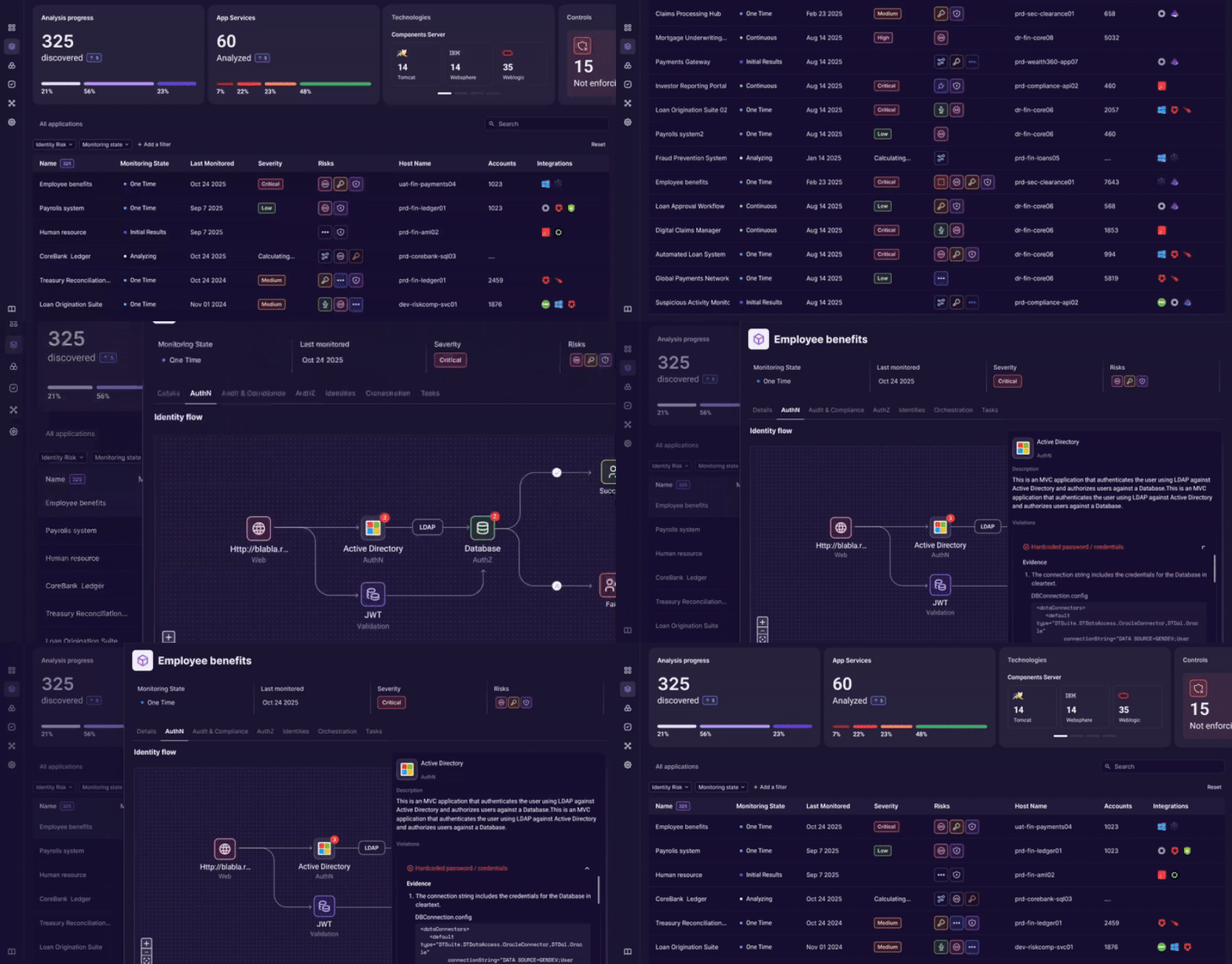
Orchid Security addresses this gap by providing continuous identity observability across applications. The platform follows a four-stage operational model aligned to how security teams work.
Discover: Identify Identity Usage Inside Applications
Orchid begins by discovering applications and their identity implementations.
Lightweight instrumentation analyzes applications directly to identify authentication methods, authorization logic, and credential usage.
This discovery includes both managed and unmanaged environments.
Teams gain an accurate inventory of:
- Applications and services
- Identity types in use
- Authentication flows
- Embedded credentials
This establishes a baseline of identity activity across the environment.
Analyze: Assess Identity Risk Based on Observed Behavior
Once discovery is complete, Orchid analyzes identity usage in context.
The platform correlates identities, applications, and access paths to surface risk indicators such as:
- Shared or hardcoded credentials
- Orphaned service accounts
- Privileged access paths outside IAM
- Drift between intended and actual access
Analysis is driven by observed behavior rather than assumed policy.
This allows teams to focus on identity risks that are actively in use.


Orchestrate: Act on Identity Findings
With analysis complete, Orchid enables teams to take action.
The platform integrates with existing IAM, PAM, and security workflows to support remediation efforts.
Teams can:
- Prioritize identity risks by impact
- Route findings to the appropriate control owner
- Track remediation progress over time
Orchid does not replace existing controls. It coordinates them using an accurate identity context.

Audit: Maintain Continuous Evidence of Identity Control
Because discovery and analysis run continuously, audit data is always available.
Security and GRC teams can access:
- Current application inventories
- Evidence of identity usage
- Documentation of control gaps and remediation actions
This reduces reliance on manual evidence collection and point-in-time reviews.
Audit becomes an ongoing process rather than a periodic scramble.


Practical Outcomes for Security Teams
Organizations using Orchid gain:
- Improved visibility into application-level identity usage
- Reduced exposure from unmanaged access paths
- Faster audit preparation
- Clear accountability for identity risk
Most importantly, teams can make decisions based on verified data rather than assumptions. Learn more about how Orchid uncovers Identity Dark Matter.
A few final words
As identity continues to move beyond centralized directories, security teams need new ways to understand and govern access.
Orchid Security provides continuous identity observability across applications, enabling organizations to discover identity usage, analyze risk, orchestrate remediation, and maintain audit-ready evidence.
This approach aligns identity security with how modern enterprise environments actually operate.

