Close Menu
  • Home
  • News
  • Cyber Security
  • Internet of Things
  • Tips and Advice

Subscribe to Updates

Get the latest creative news from FooBar about art, design and business.

What's Hot

Researchers Uncover Chrome Extensions Abusing Affiliate Links and Stealing ChatGPT Access

February 7, 2026

China-Linked UAT-8099 Targets IIS Servers in Asia with BadIIS SEO Malware

February 7, 2026

Badges, Bytes and Blackmail

February 7, 2026
Facebook X (Twitter) Instagram
Saturday, February 7
Facebook X (Twitter) Instagram Pinterest Vimeo
Cyberwire Daily
  • Home
  • News
  • Cyber Security
  • Internet of Things
  • Tips and Advice
Cyberwire Daily
Home»News»Attackers Abuse AI Tools to Generate Fake CAPTCHAs in Phishing Attacks
News

Attackers Abuse AI Tools to Generate Fake CAPTCHAs in Phishing Attacks

Team-CWDBy Team-CWDSeptember 19, 2025No Comments3 Mins Read
Share Facebook Twitter Pinterest LinkedIn Tumblr Reddit Telegram Email
Share
Facebook Twitter LinkedIn Pinterest Email


Cybercriminals are abusing AI platforms to create and host fake CAPTCHA pages to enhance phishing campaigns, according to new Trend Micro research.

Attackers are exploiting the ease of deployment, free hosting and credible branding offered by such platforms to set up such pages at speed and scale.

The fake CAPTCHA pages redirect victims to malicious websites hosted by the attackers. This approach makes phishing attacks more likely to succeed as the apparent routine security check makes the malicious link appear more legitimate to the victim and help bypass security tools.

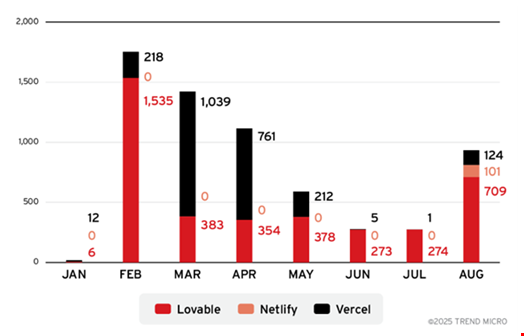
The use of AI platforms for such pages has been observed since January 2025, escalating sharply from February to April, according to Trend Micro data.

The researchers highlighted attackers’ use of three AI-powered platforms – Lovable, which allows anyone to build and host applications with little to no coding knowledge, and Netlify and Vercel, which are AI-native development platforms.

Vercel was linked to 52 phishing emails, Lovable 43 and Netlify three.

Number of malicious emails containing links to AI platforms, from January to August 2025. Source: Trend Micro

The researchers noted that these AI tools allow attackers to set up convincing fake CAPTCHA sites with minimal technical skills.

“On Lovable, attackers can use vibe coding to generate a fake CAPTCHA or phishing page, while Netlify and Vercel make it simple to integrate AI coding assistants in the continuous integration/continuous delivery (CI/CD) pipeline to churn out fake CAPTCHA pages,” the researchers explained.

Additionally, the availability of free tiers on these platforms lowers the cost of entry for launching these sophisticated phishing operations.

“The rise of fake CAPTCHA phishing highlights how attackers are weaponizing AI-powered website creation platforms. While these services drive innovation for legitimate developers, they can also provide cybercriminals with the tools to launch phishing attacks at scale, quickly and at minimal cost,” the Trend Micro researchers wrote in a blog published on September 19.

How the Phishing Campaigns Work

The phishing campaigns typically begin with spam emails carrying urgent messages such as “Password Reset Required” or “USPS Change of Address Notification”.

Clicking the embedded URL directs the target to an apparent CAPTCHA verification page – this serves the dual purpose of making the link appear more legitimate and helping bypass detection tools as automated scanners crawling the page encounter only a CAPTCHA.
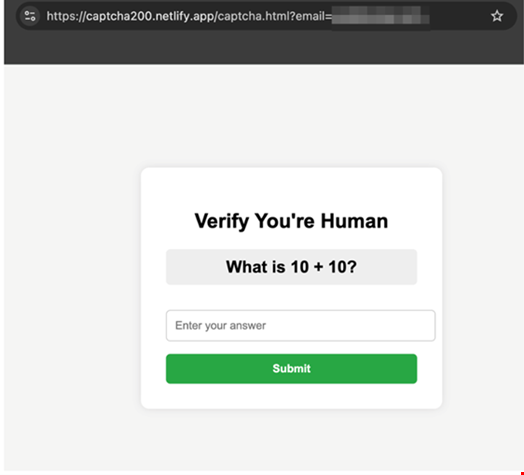
Example fake CAPTCHA page used in the campaigns. Source: Trend Micro

Once the CAPTCHA is completed, the victim is redirected to the actual phishing page, where their credentials and other sensitive data can be stolen.

Trend Micro provided a number of recommendations for organizations on how to mitigate the risks of captcha-based phishing campaigns:

  • Educate employees on how to spot captcha-based phishing attempts, including verifying URLs before interacting with captchas
  • Implement defenses capable of analyzing redirect chains
  • Monitor trusted domains for signs of abuse by tracking traffic to their subdomains


Source

Share. Facebook Twitter Pinterest LinkedIn Tumblr Email
Previous ArticleNew Phishing Kit Targeting US and EU Enterprises
Next Article Automating vCISO and Compliance Services
Team-CWD
  • Website

Related Posts

News

Researchers Uncover Chrome Extensions Abusing Affiliate Links and Stealing ChatGPT Access

February 7, 2026
News

China-Linked UAT-8099 Targets IIS Servers in Asia with BadIIS SEO Malware

February 7, 2026
News

Badges, Bytes and Blackmail

February 7, 2026
Add A Comment
Leave A Reply Cancel Reply

Latest News

North Korean Hackers Turn JSON Services into Covert Malware Delivery Channels

November 24, 202522 Views

macOS Stealer Campaign Uses “Cracked” App Lures to Bypass Apple Securi

September 7, 202517 Views

North Korean Hackers Exploit Threat Intel Platforms For Phishing

September 7, 20256 Views

U.S. Treasury Sanctions DPRK IT-Worker Scheme, Exposing $600K Crypto Transfers and $1M+ Profits

September 5, 20256 Views

Ukrainian Ransomware Fugitive Added to Europe’s Most Wanted

September 11, 20255 Views
Stay In Touch
  • Facebook
  • YouTube
  • TikTok
  • WhatsApp
  • Twitter
  • Instagram
Most Popular

North Korean Hackers Turn JSON Services into Covert Malware Delivery Channels

November 24, 202522 Views

macOS Stealer Campaign Uses “Cracked” App Lures to Bypass Apple Securi

September 7, 202517 Views

North Korean Hackers Exploit Threat Intel Platforms For Phishing

September 7, 20256 Views
Our Picks

Is it time for internet services to adopt identity verification?

January 14, 2026

Look out for phony verification pages spreading malware

September 14, 2025

How the always-on generation can level up their cybersecurity game

September 11, 2025

Subscribe to Updates

Get the latest news from cyberwiredaily.com

Facebook X (Twitter) Instagram Pinterest
  • Home
  • Contact
  • Privacy Policy
  • Terms of Use
  • California Consumer Privacy Act (CCPA)
© 2026 All rights reserved.

Type above and press Enter to search. Press Esc to cancel.