


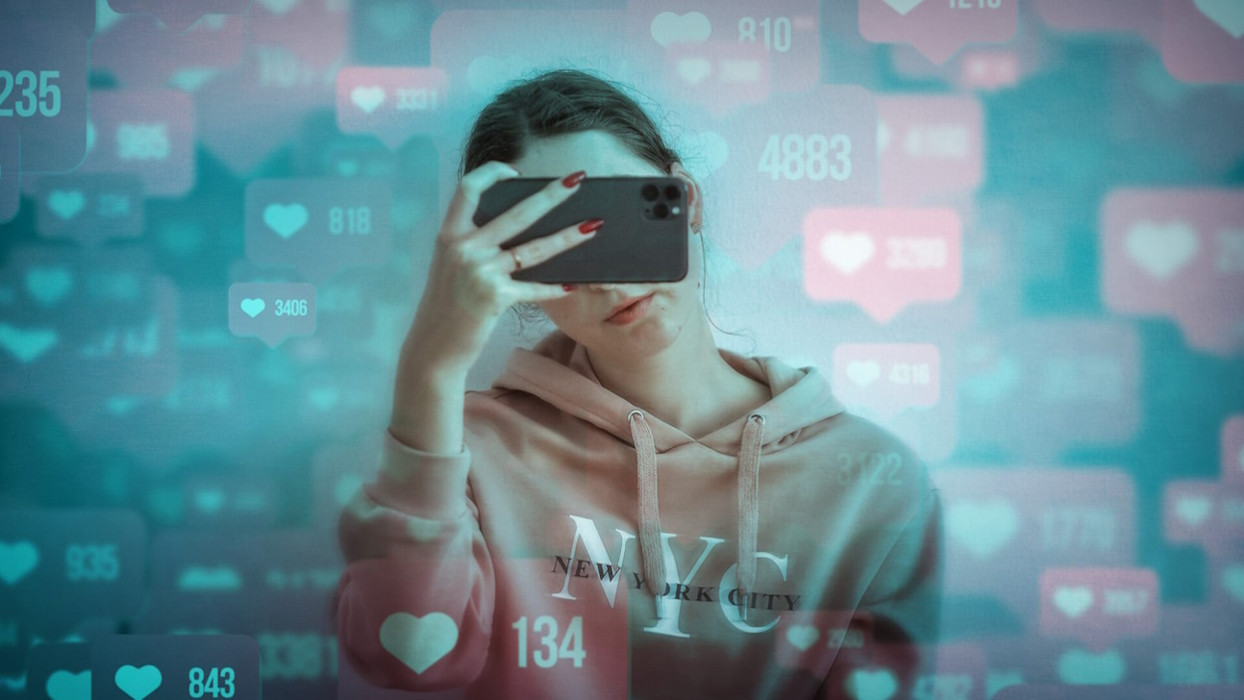
When it comes to our children’s digital lives, prohibition rarely works. It’s our responsibility to help them build a healthy relationship with tech.
The lives our children lead today are very different to our own, 20, 30 or even 40-plus years ago. And the main reason for that difference is technology. For good and bad, the advent of smartphones and social media has fundamentally changed the way our kids interact with each other and the world around them. There’s no putting the genie back in the bottle. So the question for parents is, how do we manage the potential risks while enabling our children to lead happy digital lives?
When it comes to posting selfies, there are some specific harms to consider. But talking things through is always the best first port of call.
The pros and cons of social media
Although some would have you believe otherwise, social media is not inherently evil. In some ways, it can even benefit youngsters, providing a safe space for self-expression, and/or a community of likeminded people to share stories and friendship. Some kids may even reach out to find help and support from official sources via their social media accounts, when they’re too scared to ask their parents.
However, context is everything. One important clarification is whether your children use social media mainly as a comms channel, to comment on photos and videos, or to repost content. Or whether they frequently post videos and selfies of themselves. Unless their profile is locked down and frequently vetted, the latter could present some issues.
How selfies can invite risk
As soon as a selfie is posted onto a social media site, your child loses a certain amount of control over it. Even if they delete it, your child may find that the image has been reposted and shared by their friends and followers.
This idea of “digital permanence” might not occur to a teenager when they’re post online. But it matters now more than ever, in an age when AI bots are scraping social media content to train large language models (LLMs). This amplifies the potential risk of private content leaking into the public domain.
More concerning still for parents are the risks that a selfie might:
- Attract predators looking for victims to groom.
- Attract predators and extortionists looking for images they can feed into AI “nudifier” tools, to make indecent content. This could be shared online and/or used to blackmail the victim.
- Feature personal information like birth dates, or the name of their school, which could be used in combination with other information to commit identity theft.
- Be used by cyberbullies and trolls to victimize your child online.
- Contain embarrassing or inappropriate details which are seen by employers or further education institutions in years to come.
Do selfies impact mental health?
There’s also a growing body of evidence to suggest that social media use, including the posting of selfies, could result in psychological harm. A 2017 study of eighth to 12th graders found a 33% increase in depressive symptoms between 2010-2015. The suicide rate for girls in this age group increased by 65% over the same period.
There’s no direct causal link here. But the correlation is clear, as this is the same period that smartphone and social media penetration surged in the West. Experts have also claimed that social media can impact young people’s self-esteem, physical health, and quality of sleep. The use of AI filters in combination with selfies could theoretically foment an unhealthy obsession with appearance at a time in life when we’re emotionally and psychologically vulnerable. It’s part of the reason why the US surgeon general in 2023 released an advisory on Social Media and Young Mental Health.
Time for parental guidance
As parents, we have a unique and important role to play in setting boundaries, teaching best practice and providing emotional and psychological support for our kids. This is true of many aspects of life, but especially the digital world.
Start by opening the communication channels. Set clear rules about what kind of selfies should be off limits, such as provocative images or anything including identifying information like your address. But balance this by teaching your kids about privacy settings, including how to restrict their profile, switch off geolocation and require manual approvals for others to tag them in photos. Teach them also why they should be selective about who they allow to follow them (i.e., only people they’re friends with in real life). And why it might be useful to do a “digital spring clean” every few months to remove certain followers and other contacts.
It’s important to create a non-judgmental, respectful environment in order to encourage honesty, especially if your child wants to talk to you about something they find uncomfortable or embarrassing like cyberbullying or sextortion. But if you feel like that trust has been broken, parental monitoring tools are an option, for limiting screen time and access to specific content and apps.
Building a better relationship with technology
Ultimately, it’s not about banning your child from posting selfies. It’s about giving them the information to make rational, risk-based decisions about what to post online. That includes warning them about predators, bullies and fraudsters. But also the potential mental health implications of excessive social media use.
So by all means try things like minimizing screen time at home, banning phones at the table, and setting aside an hour or two at the weekend for family activities. But you also need to lead by example. A 2024 study finds that 75% of parents share photos, videos and other content on their children. Before you start a conversation about the pros and cons of your kids sharing selfies online, consider first reining in your “sharenting” behavior.
