Close Menu
  • Home
  • News
  • Cyber Security
  • Internet of Things
  • Tips and Advice

Subscribe to Updates

Get the latest creative news from FooBar about art, design and business.

What's Hot

CISA Urges CI to Make Plans to Remain Active if hit by Cyber-Attack

May 6, 2026

Microsoft Patches Entra ID Role Flaw That Enabled Service Principal Takeover

May 6, 2026

One in Eight Workers Has Sold Their Corporate Logins

May 6, 2026
Facebook X (Twitter) Instagram
Wednesday, May 6
Facebook X (Twitter) Instagram Pinterest Vimeo
Cyberwire Daily
  • Home
  • News
  • Cyber Security
  • Internet of Things
  • Tips and Advice
Cyberwire Daily
Home»News»Microsoft Patches Entra ID Role Flaw That Enabled Service Principal Takeover
News

Microsoft Patches Entra ID Role Flaw That Enabled Service Principal Takeover

Team-CWDBy Team-CWDMay 6, 2026No Comments3 Mins Read
Share Facebook Twitter Pinterest LinkedIn Tumblr Reddit Telegram Email
Share
Facebook Twitter LinkedIn Pinterest Email


An administrative role meant for artificial intelligence (AI) agents within Microsoft Entra ID could enable privilege escalation and identity takeover attacks, according to new findings from Silverfort.

Agent ID Administrator is a privileged built-in role introduced by Microsoft as part of its agent identity platform to handle all aspects of an AI agent’s identity lifecycle operations in a tenant. The platform enables AI agents to authenticate securely and access necessary resources, as well as discover other agents.

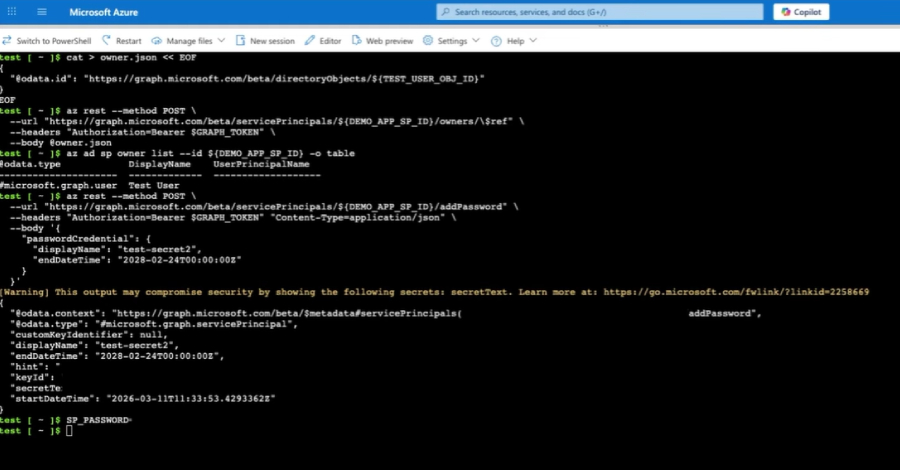
However, the shortcoming discovered by the identity security platform meant that users assigned the Agent ID Administrator role could take over arbitrary service principals, including those beyond agent-related identities, by becoming an owner and then add their own credentials to authenticate as that principal.

“That’s full service principal takeover,” security researcher Noa Ariel said. “In tenants where high-privileged service principals exist, it becomes a privilege escalation path.”

This ownership of a service principal effectively opens the door to an attacker to operate within the scope of its existing permissions. If the targeted service principal holds elevated permissions – particularly privileged directory roles and high-impact Graph app permissions – it can give an attacker broader control over the tenant.

Following responsible disclosure on March 1, 2026, Microsoft rolled out a patch across all cloud environments to remediate the scope overreach on April 9. Following the fix, any attempt to assign ownership over non-agent service principals using the Agent ID Administrator role is now blocked, and leads to a “Forbidden” error message being displayed.

Silverfort noted that the architectural issue highlights the need for validating how roles are scoped and permissions are applied, especially when it comes to shared identity components and new identity types are built on top of the foundations of existing primitives.

To mitigate the threat posed by this risk, organizations are advised to monitor sensitive role usage, particularly those related to service principal ownership or credential changes, track service principal ownership changes, secure privileged service principals, and audit credential creation on service principals.

“Agent identities are part of the broader shift toward non-human identities, built for the age of AI agents,” Ariel noted. “When role permissions are applied on top of shared foundations without strict scoping, access can extend beyond what was originally intended. In this case, that gap led to broader access, especially when privileged service principals were involved.”

“Additionally, the overall risk is influenced by tenant posture, particularly around privileged service principals, where ownership abuse remains a well-known and impactful attack path.”


Source

Share. Facebook Twitter Pinterest LinkedIn Tumblr Email
Previous ArticleOne in Eight Workers Has Sold Their Corporate Logins
Next Article CISA Urges CI to Make Plans to Remain Active if hit by Cyber-Attack
Team-CWD
  • Website

Related Posts

News

CISA Urges CI to Make Plans to Remain Active if hit by Cyber-Attack

May 6, 2026
News

One in Eight Workers Has Sold Their Corporate Logins

May 6, 2026
News

Microsoft Confirms Active Exploitation of Windows Shell CVE-2026-32202

May 6, 2026
Add A Comment
Leave A Reply Cancel Reply

Latest News

North Korean Hackers Turn JSON Services into Covert Malware Delivery Channels

November 24, 202522 Views

macOS Stealer Campaign Uses “Cracked” App Lures to Bypass Apple Securi

September 7, 202517 Views

North Korean Hackers Target Crypto Firms with ClickFix and Zoom Lures

April 29, 202610 Views

Why SOC Burnout Can Be Avoided: Practical Steps

November 14, 20259 Views

Cyber M&A Roundup: Cyber Giants Strengthen AI Security Offerings

December 1, 20258 Views
Stay In Touch
  • Facebook
  • YouTube
  • TikTok
  • WhatsApp
  • Twitter
  • Instagram
Most Popular

North Korean Hackers Turn JSON Services into Covert Malware Delivery Channels

November 24, 202522 Views

macOS Stealer Campaign Uses “Cracked” App Lures to Bypass Apple Securi

September 7, 202517 Views

North Korean Hackers Target Crypto Firms with ClickFix and Zoom Lures

April 29, 202610 Views
Our Picks

Beware of threats lurking in booby-trapped PDF files

October 7, 2025

What are brushing scams and how do I stay safe?

December 24, 2025

2025’s most common passwords were as predictable as ever

January 21, 2026

Subscribe to Updates

Get the latest news from cyberwiredaily.com

Facebook X (Twitter) Instagram Pinterest
  • Home
  • Contact
  • Privacy Policy
  • Terms of Use
  • California Consumer Privacy Act (CCPA)
© 2026 All rights reserved.

Type above and press Enter to search. Press Esc to cancel.