Close Menu
  • Home
  • News
  • Cyber Security
  • Internet of Things
  • Tips and Advice

Subscribe to Updates

Get the latest creative news from FooBar about art, design and business.

What's Hot

China-Linked Hackers Use TernDoor, PeerTime, BruteEntry in South American Telecom Attacks

March 14, 2026

Microsoft Reveals ClickFix Campaign Using Windows Terminal to Deploy Lumma Stealer

March 14, 2026

Hikvision and Rockwell Automation CVSS 9.8 Flaws Added to CISA KEV Catalog

March 14, 2026
Facebook X (Twitter) Instagram
Saturday, March 14
Facebook X (Twitter) Instagram Pinterest Vimeo
Cyberwire Daily
  • Home
  • News
  • Cyber Security
  • Internet of Things
  • Tips and Advice
Cyberwire Daily
Home»News»Microsoft Reveals ClickFix Campaign Using Windows Terminal to Deploy Lumma Stealer
News

Microsoft Reveals ClickFix Campaign Using Windows Terminal to Deploy Lumma Stealer

Team-CWDBy Team-CWDMarch 14, 2026No Comments3 Mins Read
Share Facebook Twitter Pinterest LinkedIn Tumblr Reddit Telegram Email
Share
Facebook Twitter LinkedIn Pinterest Email


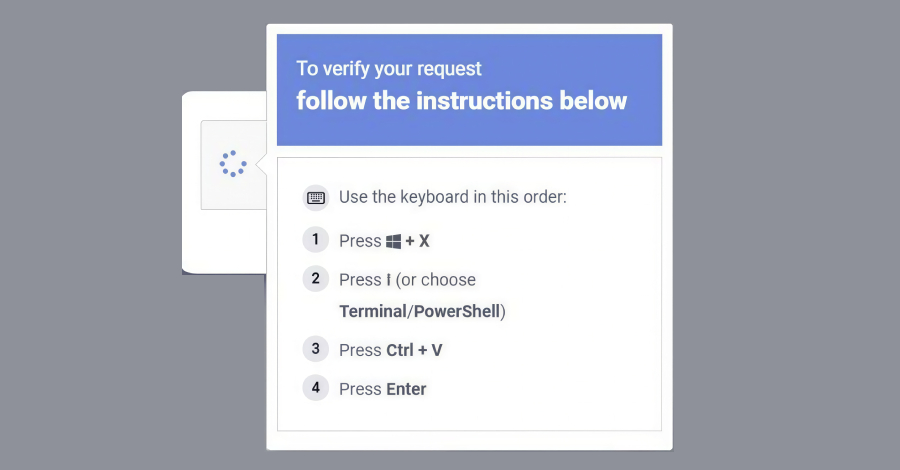
Microsoft on Thursday disclosed details of a new widespread ClickFix social engineering campaign that has leveraged the Windows Terminal app as a way to activate a sophisticated attack chain and deploy the Lumma Stealer malware.

The activity, observed in February 2026, makes use of the terminal emulator program instead of instructing users to launch the Windows Run dialog and paste a command into it.

“This campaign instructs targets to use the Windows + X → I shortcut to launch Windows Terminal (wt.exe) directly, guiding users into a privileged command execution environment that blends into legitimate administrative workflows and appears more trustworthy to users,” the Microsoft Threat Intelligence team said in a series of posts on X.

What makes the latest variant notable is that it bypasses detections specifically designed to flag Run dialog abuse, not to mention take advantage of the legitimacy of Windows Terminal to trick unsuspecting users into running malicious commands delivered via bogus CAPTCHA pages, troubleshooting prompts, or other verification-style lures.

The post-compromise attack chain is also unique: when the user pastes a hex-encoded, XOR-compressed command copied from the ClickFix lure page into a Windows Terminal session, it spans additional Terminal/PowerShell instances to ultimately invoke a PowerShell process responsible for decoding the script.

This, in turn, leads to the download of a ZIP payload and a legitimate but renamed 7-Zip binary, the latter of which is saved to disk with a randomized file name. The utility then proceeds to extract the contents of the ZIP file, triggering a multi-stage attack chain that involves the following steps –

  • Retrieving more payloads
  • Setting up persistence via scheduled tasks
  • Configuring Microsoft Defender exclusions
  • Exfiltrating machine and network data
  • Deploying Lumma Stealer using a technique called QueueUserAPC() by injecting the malware into “chrome.exe” and “msedge.exe” processes

“The stealer targets high-value browser artifacts, including Web Data and Login Data, harvesting stored credentials and exfiltrating them to attacker-controlled infrastructure,” Microsoft said.

The Windows maker said it also detected a second attack pathway, as part of which, when the compressed command is pasted into Windows Terminal, it downloads a randomly named batch script to the “AppDataLocal” folder by means of “cmd.exe” in order to write a Visual Basic Script to the Temp folder (aka %TEMP%).

“The batch script is then executed via cmd.exe with the /launched command-line argument. The same batch script is then executed through MSBuild.exe, resulting in LOLBin abuse,” it added. “The script connects to Crypto Blockchain RPC endpoints, indicating an etherhiding technique. It also performs QueueUserAPC()-based code injection into chrome.exe and msedge.exe processes to harvest Web Data and Login Data.”


Source

Share. Facebook Twitter Pinterest LinkedIn Tumblr Email
Previous ArticleHikvision and Rockwell Automation CVSS 9.8 Flaws Added to CISA KEV Catalog
Next Article China-Linked Hackers Use TernDoor, PeerTime, BruteEntry in South American Telecom Attacks
Team-CWD
  • Website

Related Posts

News

China-Linked Hackers Use TernDoor, PeerTime, BruteEntry in South American Telecom Attacks

March 14, 2026
News

Hikvision and Rockwell Automation CVSS 9.8 Flaws Added to CISA KEV Catalog

March 14, 2026
News

Post-Quantum Cryptography Webinar for Security Leaders

March 14, 2026
Add A Comment
Leave A Reply Cancel Reply

Latest News

North Korean Hackers Turn JSON Services into Covert Malware Delivery Channels

November 24, 202522 Views

macOS Stealer Campaign Uses “Cracked” App Lures to Bypass Apple Securi

September 7, 202517 Views

Cyber M&A Roundup: Cyber Giants Strengthen AI Security Offerings

December 1, 20258 Views

Near-ultrasonic attacks on voice assistants

September 11, 20256 Views

North Korean Hackers Exploit Threat Intel Platforms For Phishing

September 7, 20256 Views
Stay In Touch
  • Facebook
  • YouTube
  • TikTok
  • WhatsApp
  • Twitter
  • Instagram
Most Popular

North Korean Hackers Turn JSON Services into Covert Malware Delivery Channels

November 24, 202522 Views

macOS Stealer Campaign Uses “Cracked” App Lures to Bypass Apple Securi

September 7, 202517 Views

Cyber M&A Roundup: Cyber Giants Strengthen AI Security Offerings

December 1, 20258 Views
Our Picks

Your information is on the dark web. What happens next?

January 13, 2026

Why LinkedIn is a hunting ground for threat actors – and how to protect yourself

January 16, 2026

Beware of Winter Olympics scams and other cyberthreats

February 2, 2026

Subscribe to Updates

Get the latest news from cyberwiredaily.com

Facebook X (Twitter) Instagram Pinterest
  • Home
  • Contact
  • Privacy Policy
  • Terms of Use
  • California Consumer Privacy Act (CCPA)
© 2026 All rights reserved.

Type above and press Enter to search. Press Esc to cancel.