Close Menu
  • Home
  • News
  • Cyber Security
  • Internet of Things
  • Tips and Advice

Subscribe to Updates

Get the latest creative news from FooBar about art, design and business.

What's Hot

US Sanctions Mabna Institute Hackers for Iranian Cyber-Attacks

August 26, 2026

StopAndProtect Uses Nearly 2,000 Hacked WordPress Sites to Spread Malware and Steal Data

August 26, 2026

Fake Minecraft Clients Deliver WeedHack Malware Despite Takedown

August 25, 2026
Facebook X (Twitter) Instagram
Wednesday, August 26
Facebook X (Twitter) Instagram Pinterest Vimeo
Cyberwire Daily
  • Home
  • News
  • Cyber Security
  • Internet of Things
  • Tips and Advice
Cyberwire Daily
Home»News»New Guidance Helps Businesses Verify Quantum-Safe Hardware Claims
News

New Guidance Helps Businesses Verify Quantum-Safe Hardware Claims

Team-CWDBy Team-CWDAugust 24, 2026No Comments2 Mins Read
Share Facebook Twitter Pinterest LinkedIn Tumblr Reddit Telegram Email
Share
Facebook Twitter LinkedIn Pinterest Email


As organizations race to future-proof their systems against quantum-enabled attacks, questions remain around how to verify whether hardware is quantum-safe. A new industry benchmark aims to answer that question.

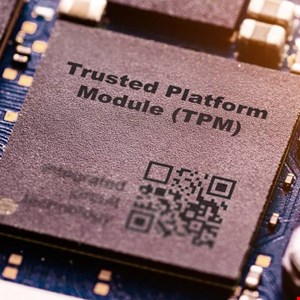
The Trusted Computing Group (TCG) released new guidance on August 24 that helps prove that trusted platform modules (TPMs) genuinely meet essential PQC requirements.

TCG is a nonprofit organization tasked with promoting vendor-neutral standards for hardware-based security products like TPMs.

TPMs are specialized security chips installed on a computer motherboard or processor that safely store passwords, digital certificates and encryption keys. TCG, the main standards body, has published the version 1.2 of it specifications for second-generation TPMs (TPM 2.0) – which are part of the Windows 11 system requirements.

TPMs will likely play an important role in some organizations’ PQC roadmap as they offer a robust solution to maintain trusted identities, platform integrity, attestation and hardware-anchored security over time.

With the potential evolution of PQC algorithms over time, these elements “may need to remain secure for decades,” TCG noted. Not all TPMs currently on the market provide quantum-safe encryption options and some advertise “compliance” yet fail to provide full, end-to-end security capabilities.

In March 2026, the nonprofit brough together almost 90 contributors from government, academia, semiconductor companies and computing hardware providers – including Intel, Google, Hewlett Packard Enterprise, Microsoft, NVIDIA, Lenovo, STMIcroelectronics and more – to develop a standard for PQ-ready TPMs, the TCG PC Client Platform TPM Profile (PTP) 1.07.

The TCG standard document outlines the minimum requirements for PQC-ready TPMs.

Now, TCG has released an accompanying document helping businesses to verify whether their TPMs meet the requirements of PTP 1.07.

It also designates two categories to describe how ready a TPM is for the transition to post-quantum cryptography (PQC):

  • ‘TCG PQC-ready TPM’ – a TPM that already supports the PQC capabilities defined in PTP 1.07
  • ‘TCG PQC-upgradable TPM’ – a TPM that does not yet support PTP 1.07 but is designed to be upgraded to support it

These designations provide a simple way to understand where a platform stands in its transition to PQC.

The nonprofit has also announced plans to enhance its certification programs to certify TCG PQC-ready TPM.


Source

Share. Facebook Twitter Pinterest LinkedIn Tumblr Email
Previous ArticleAI “Mind Viruses” Can Spread Between Agents Through Persistent Prompt Files
Next Article Ransom Busters Claims It Hacked Ransomware Servers, Asks Victims for Up to $60,000
Team-CWD
  • Website

Related Posts

News

US Sanctions Mabna Institute Hackers for Iranian Cyber-Attacks

August 26, 2026
News

StopAndProtect Uses Nearly 2,000 Hacked WordPress Sites to Spread Malware and Steal Data

August 26, 2026
News

Fake Minecraft Clients Deliver WeedHack Malware Despite Takedown

August 25, 2026
Add A Comment
Leave A Reply Cancel Reply

Latest News

North Korean Hackers Turn JSON Services into Covert Malware Delivery Channels

November 24, 202523 Views

macOS Stealer Campaign Uses “Cracked” App Lures to Bypass Apple Securi

September 7, 202517 Views

North Korean Hackers Target Crypto Firms with ClickFix and Zoom Lures

April 29, 202610 Views

All Major LLMs Exposed to Multi-Turn Manipulation, Warn Researchers

May 27, 20269 Views

Why SOC Burnout Can Be Avoided: Practical Steps

November 14, 20259 Views
Stay In Touch
  • Facebook
  • YouTube
  • TikTok
  • WhatsApp
  • Twitter
  • Instagram
Most Popular

North Korean Hackers Turn JSON Services into Covert Malware Delivery Channels

November 24, 202523 Views

macOS Stealer Campaign Uses “Cracked” App Lures to Bypass Apple Securi

September 7, 202517 Views

North Korean Hackers Target Crypto Firms with ClickFix and Zoom Lures

April 29, 202610 Views
Our Picks

Mobile app permissions (still) matter more than you may think

February 27, 2026

Fixing trivial passwords is as easy as 123456

May 7, 2026

The quest for greater tech independence

May 19, 2026

Subscribe to Updates

Get the latest news from cyberwiredaily.com

Facebook X (Twitter) Instagram Pinterest
  • Home
  • Contact
  • Privacy Policy
  • Terms of Use
  • California Consumer Privacy Act (CCPA)
© 2026 All rights reserved.

Type above and press Enter to search. Press Esc to cancel.