Close Menu
  • Home
  • News
  • Cyber Security
  • Internet of Things
  • Tips and Advice

Subscribe to Updates

Get the latest creative news from FooBar about art, design and business.

What's Hot

Poisoned Ruby Gems and Go Modules Exploit CI Pipelines for Credential Theft

May 9, 2026

PyTorch Lightning and Intercom-client Hit in Supply Chain Attacks to Steal Credentials

May 9, 2026

ThreatsDay Bulletin: SMS Blaster Busts, OpenEMR Flaws, 600K Roblox Hacks and 25 More Stories

May 9, 2026
Facebook X (Twitter) Instagram
Sunday, May 10
Facebook X (Twitter) Instagram Pinterest Vimeo
Cyberwire Daily
  • Home
  • News
  • Cyber Security
  • Internet of Things
  • Tips and Advice
Cyberwire Daily
Home»News»Poisoned Ruby Gems and Go Modules Exploit CI Pipelines for Credential Theft
News

Poisoned Ruby Gems and Go Modules Exploit CI Pipelines for Credential Theft

Team-CWDBy Team-CWDMay 9, 2026No Comments2 Mins Read
Share Facebook Twitter Pinterest LinkedIn Tumblr Reddit Telegram Email
Share
Facebook Twitter LinkedIn Pinterest Email


A new software supply chain attack campaign has been observed using sleeper packages as a conduit to subsequently push malicious payloads that enabled credential theft, GitHub Actions tampering, and SSH persistence.

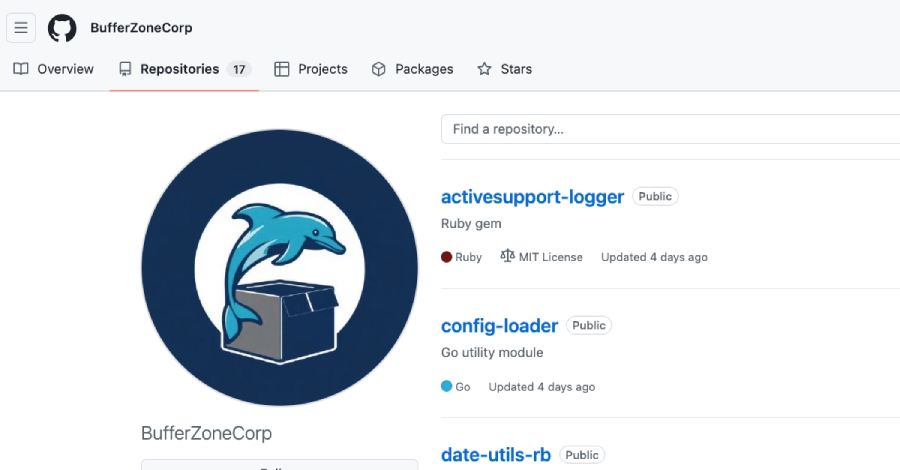
The activity has been attributed to the GitHub account “BufferZoneCorp,” which has published a set of repositories that are associated with malicious Ruby gems and Go modules. As of writing, the packages have been yanked from RubyGems, and the Go modules have been blocked. The names of the libraries are listed below –

  • Ruby:
    • knot-activesupport-logger
    • knot-devise-jwt-helper
    • knot-rack-session-store
    • knot-rails-assets-pipeline
    • knot-rspec-formatter-json
    • knot-date-utils-rb (Sleeper gem)
    • knot-simple-formatter (Sleeper gem)
  • Go:
    • github[.]com/BufferZoneCorp/go-metrics-sdk
    • github[.]com/BufferZoneCorp/go-weather-sdk
    • github[.]com/BufferZoneCorp/go-retryablehttp
    • github[.]com/BufferZoneCorp/go-stdlib-ext
    • github[.]com/BufferZoneCorp/grpc-client
    • github[.]com/BufferZoneCorp/net-helper
    • github[.]com/BufferZoneCorp/config-loader
    • github[.]com/BufferZoneCorp/log-core (Sleeper module)
    • github[.]com/BufferZoneCorp/go-envconfig (Sleeper module)

The identified packages masquerade as recognizable and well-known modules like activesupport-logger, devise-jwt, go-retryablehttp, grpc-client, and config-loader so as to evade detection and trick users into downloading them.

“The account is part of a software supply chain campaign targeting developers, CI runners, and build environments across two ecosystems,” Socket security researcher Kirill Boychenko said in an analysis published today.

The Ruby gems are designed to automate credential theft during install time, harvesting environment variables, SSH keys, AWS secrets, .npmrc, .netrc, GitHub CLI configuration, and RubyGems credentials. The stolen data is then exfiltrated to an attacker-controlled Webhook[.]site endpoint.

On the other hand, the Go modules harbor broader capabilities to tamper with GitHub Actions workflows, plant fake Go wrappers, steal developer data, and add a hard-coded SSH public key to “~/.ssh/authorized_keys” for remote access to the compromised host. The modules do not all have the same payload; instead, they are spread across the cluster.

“The module executes through init(), detects GITHUB_ENV and GITHUB_PATH, sets HTTP_PROXY and HTTPS_PROXY, writes a fake go executable into a cache directory, and appends that directory to the workflow path so the wrapper is selected before the real binary,” Boychenko explained.

“That wrapper can then intercept or influence later go executions while still passing control to the legitimate binary to avoid breaking the job.”

Users who have installed the packages are advised to remove them from their systems, review for signs of access to sensitive files or unauthorized changes to “~/.ssh/authorized_keys,” rotate exposed credentials, and inspect network logs for outbound HTTPS traffic to the exfiltration point.


Source

Share. Facebook Twitter Pinterest LinkedIn Tumblr Email
Previous ArticlePyTorch Lightning and Intercom-client Hit in Supply Chain Attacks to Steal Credentials
Team-CWD
  • Website

Related Posts

News

PyTorch Lightning and Intercom-client Hit in Supply Chain Attacks to Steal Credentials

May 9, 2026
News

ThreatsDay Bulletin: SMS Blaster Busts, OpenEMR Flaws, 600K Roblox Hacks and 25 More Stories

May 9, 2026
News

New Python Backdoor Uses Tunneling Service to Steal Browser and Cloud Credentials

May 9, 2026
Add A Comment
Leave A Reply Cancel Reply

Latest News

North Korean Hackers Turn JSON Services into Covert Malware Delivery Channels

November 24, 202522 Views

macOS Stealer Campaign Uses “Cracked” App Lures to Bypass Apple Securi

September 7, 202517 Views

North Korean Hackers Target Crypto Firms with ClickFix and Zoom Lures

April 29, 202610 Views

Why SOC Burnout Can Be Avoided: Practical Steps

November 14, 20259 Views

Cyber M&A Roundup: Cyber Giants Strengthen AI Security Offerings

December 1, 20258 Views
Stay In Touch
  • Facebook
  • YouTube
  • TikTok
  • WhatsApp
  • Twitter
  • Instagram
Most Popular

North Korean Hackers Turn JSON Services into Covert Malware Delivery Channels

November 24, 202522 Views

macOS Stealer Campaign Uses “Cracked” App Lures to Bypass Apple Securi

September 7, 202517 Views

North Korean Hackers Target Crypto Firms with ClickFix and Zoom Lures

April 29, 202610 Views
Our Picks

Find your weak spots before attackers do

November 21, 2025

Here’s what you should know

February 6, 2026

2025’s most common passwords were as predictable as ever

January 21, 2026

Subscribe to Updates

Get the latest news from cyberwiredaily.com

Facebook X (Twitter) Instagram Pinterest
  • Home
  • Contact
  • Privacy Policy
  • Terms of Use
  • California Consumer Privacy Act (CCPA)
© 2026 All rights reserved.

Type above and press Enter to search. Press Esc to cancel.