Close Menu
  • Home
  • News
  • Cyber Security
  • Internet of Things
  • Tips and Advice

Subscribe to Updates

Get the latest creative news from FooBar about art, design and business.

What's Hot

Chinese Threat Actors Shift to Live Credential Interception

May 26, 2026

Popular GitHub Action Tags Redirected to Imposter Commit to Steal CI/CD Credentials

May 26, 2026

BTMOB Android RAT Spreads Through No-Code Builder Tooling

May 26, 2026
Facebook X (Twitter) Instagram
Tuesday, May 26
Facebook X (Twitter) Instagram Pinterest Vimeo
Cyberwire Daily
  • Home
  • News
  • Cyber Security
  • Internet of Things
  • Tips and Advice
Cyberwire Daily
Home»News»Popular GitHub Action Tags Redirected to Imposter Commit to Steal CI/CD Credentials
News

Popular GitHub Action Tags Redirected to Imposter Commit to Steal CI/CD Credentials

Team-CWDBy Team-CWDMay 26, 2026No Comments2 Mins Read
Share Facebook Twitter Pinterest LinkedIn Tumblr Reddit Telegram Email
Share
Facebook Twitter LinkedIn Pinterest Email


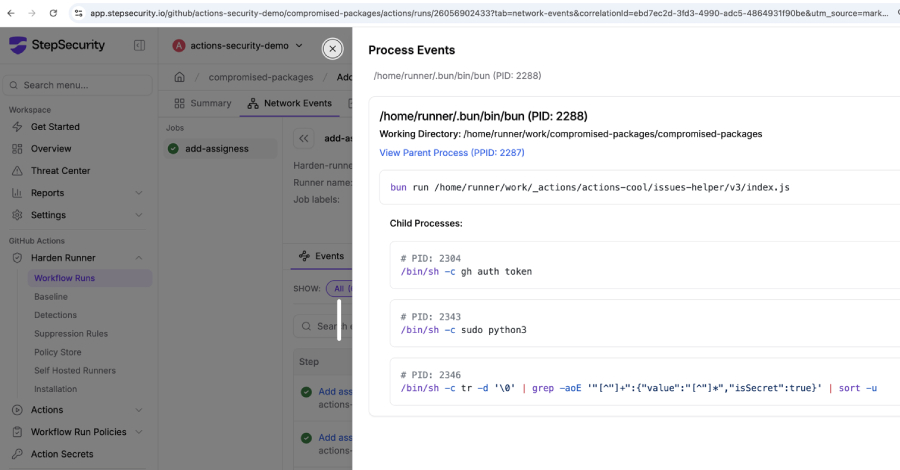
In yet another software supply chain attack, threat actors have compromised the popular GitHub Actions workflow, actions-cool/issues-helper, to run malicious code that harvests sensitive credentials and exfiltrates them to an attacker-controlled server.

“Every existing tag in the repository has been moved to point to an imposter commit that does not appear in the action’s normal commit history,” StepSecurity researcher Varun Sharma said. “That commit contains malicious code that exfiltrates credentials from CI/CD pipelines that run the action.”

An imposter commit refers to a deceptive software supply chain attack strategy in which malicious code is injected into a project by referencing a commit or tag that exists only in an adversary-controlled fork, rather than the original trusted repository. As a result, attackers can bypass standard Pull Request (PR) reviews and achieve arbitrary code execution.

The imposter commit, per the cybersecurity company, contains code that, upon being executed within a GitHub Actions runner, performs a series of actions –

  • Downloads the Bun JavaScript runtime to the runner.
  • Reads memory from the Runner.Worker process to extract credentials.
  • Makes an outbound HTTPS call to an attacker-controlled domain (“t.m-kosche[.]com”) to transmit the stolen data.

StepSecurity said 15 tags associated with a second GitHub action, “actions-cool/maintain-one-comment” have also been compromised with the same functionality.

GitHub has since disabled access to the repository due to a “violation of GitHub’s terms of service.” It’s currently not known what led the Microsoft-owned subsidiary to this decision.

Interestingly, the exfiltration domain “t.m-kosche[.]com” has been observed in the latest wave of the Mini Shai-Hulud campaign targeting npm packages from the @antv ecosystem, indicating the two clusters of activity could be related.

In a statement shared with The Hacker News, Philipp Burckhardt, head of threat intelligence at Socket, said the @antv npm compromise is likely linked to the actions-cool hack, citing overlaps in the exfiltration domain.

“That points to the same Mini Shai-Hulud activity cluster, not a separate npm-only incident,” Burckhardt added. “We’re still being careful about the exact initial access path, but the overlap is strong enough that we’re treating them as related.”

“Because every tag now resolves to malicious commits, any workflow that references the action by version pulls the malicious code on its next run,” StepSecurity said. “Only workflows pinned to a known-good full commit SHA are unaffected.”

(The story was updated after publication to include a response from Socket.)


Source

Share. Facebook Twitter Pinterest LinkedIn Tumblr Email
Previous ArticleBTMOB Android RAT Spreads Through No-Code Builder Tooling
Next Article Chinese Threat Actors Shift to Live Credential Interception
Team-CWD
  • Website

Related Posts

News

Chinese Threat Actors Shift to Live Credential Interception

May 26, 2026
News

BTMOB Android RAT Spreads Through No-Code Builder Tooling

May 26, 2026
News

Mini Shai-Hulud Pushes Malicious AntV npm Packages via Compromised Maintainer Account

May 26, 2026
Add A Comment
Leave A Reply Cancel Reply

Latest News

North Korean Hackers Turn JSON Services into Covert Malware Delivery Channels

November 24, 202522 Views

macOS Stealer Campaign Uses “Cracked” App Lures to Bypass Apple Securi

September 7, 202517 Views

North Korean Hackers Target Crypto Firms with ClickFix and Zoom Lures

April 29, 202610 Views

Why SOC Burnout Can Be Avoided: Practical Steps

November 14, 20259 Views

Cyber M&A Roundup: Cyber Giants Strengthen AI Security Offerings

December 1, 20258 Views
Stay In Touch
  • Facebook
  • YouTube
  • TikTok
  • WhatsApp
  • Twitter
  • Instagram
Most Popular

North Korean Hackers Turn JSON Services into Covert Malware Delivery Channels

November 24, 202522 Views

macOS Stealer Campaign Uses “Cracked” App Lures to Bypass Apple Securi

September 7, 202517 Views

North Korean Hackers Target Crypto Firms with ClickFix and Zoom Lures

April 29, 202610 Views
Our Picks

What it is and how to protect yourself

January 8, 2026

How chatbots can help spread scams

October 14, 2025

The WhatsApp screen-sharing scam you didn’t see coming

November 6, 2025

Subscribe to Updates

Get the latest news from cyberwiredaily.com

Facebook X (Twitter) Instagram Pinterest
  • Home
  • Contact
  • Privacy Policy
  • Terms of Use
  • California Consumer Privacy Act (CCPA)
© 2026 All rights reserved.

Type above and press Enter to search. Press Esc to cancel.