Close Menu
  • Home
  • News
  • Cyber Security
  • Internet of Things
  • Tips and Advice

Subscribe to Updates

Get the latest creative news from FooBar about art, design and business.

What's Hot

Substack Confirms Data Breach, “Limited User Data” Compromised

February 6, 2026

SmarterMail Fixes Critical Unauthenticated RCE Flaw with CVSS 9.3 Score

February 6, 2026

Here’s what you should know

February 6, 2026
Facebook X (Twitter) Instagram
Saturday, February 7
Facebook X (Twitter) Instagram Pinterest Vimeo
Cyberwire Daily
  • Home
  • News
  • Cyber Security
  • Internet of Things
  • Tips and Advice
Cyberwire Daily
Home»News»Record 29.7 Tbps DDoS Attack Linked to AISURU Botnet with up to 4 Million Infected Hosts
News

Record 29.7 Tbps DDoS Attack Linked to AISURU Botnet with up to 4 Million Infected Hosts

Team-CWDBy Team-CWDDecember 13, 2025No Comments3 Mins Read
Share Facebook Twitter Pinterest LinkedIn Tumblr Reddit Telegram Email
Share
Facebook Twitter LinkedIn Pinterest Email


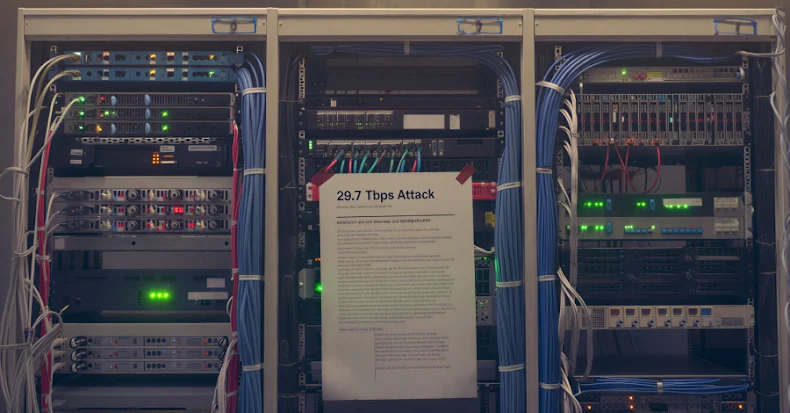
Cloudflare on Wednesday said it detected and mitigated the largest ever distributed denial-of-service (DDoS) attack that measured at 29.7 terabits per second (Tbps).

The activity, the web infrastructure and security company said, originated from a DDoS botnet-for-hire known as AISURU, which has been linked to a number of hyper-volumetric DDoS attacks over the past year. The attack lasted for 69 seconds. It did not disclose the target of the attack.

The botnet has prominently targeted telecommunication providers, gaming companies, hosting providers, and financial services. Also tackled by Cloudflare was a 14.1 Bpps DDoS attack from the same botnet. AISURU is believed to be powered by a massive network comprising an estimated 1-4 million infected hosts worldwide.

“The 29.7 Tbps was a UDP carpet-bombing attack bombarding an average of 15,000 destination ports per second,” Omer Yoachimik and Jorge Pacheco said. “The distributed attack randomized various packet attributes in an attempt to evade defenses.”

In all, Cloudflare has mitigated 2,867 Aisuru attacks since the start of the year, out of which 1,304 hyper-volumetric attacks were launched from the botnet in the third quarter of 2025 alone. A total of 8.3 million DDoS attacks were blocked during the entire time period, a figure that represents a 15% increase from the previous quarter and a 40% jump from last year.

As many as 36.2 million DDoS attacks were thwarted in 2025, of which 1,304 were network-layer attacks exceeding 1 Tbps, up from 717 in Q1 2025 and 846 in Q2 2025. Some of the other notable trends observed in Q3 2025 are listed below –

  • The number of DDoS attacks that exceeded 100 million packets per second (Mpps) increased by 189% QoQ.
  • Most attacks, 71% of HTTP DDoS and 89% of network layer, lasted less than 10 minutes.
  • Seven out of the 10 top sources of DDoS were locations within Asia, including Indonesia, Thailand, Bangladesh, Vietnam, India, Hong Kong, and Singapore. The other three sources are Ecuador, Russia, and Ukraine.
  • DDoS attacks against the mining, minerals, and metals industry surged, making it the 49th most attacked sector globally.
  • The automotive industry saw the largest increase in DDoS attacks, placing it as the sixth most attacked sector globally.
  • DDoS attack traffic against artificial intelligence (AI) companies spiked by 347% in September 2025
  • Information technology, telecommunications, gambling, gaming, and internet services topped the list of most attacked sectors.
  • China, Turkey, Germany, Brazil, the U.S., Russia, Vietnam, Canada, South Korea, and the Philippines were the most attacked countries.
  • Nearly 70% of HTTP DDoS attacks originated from known botnets.

“We’ve entered an era where DDoS attacks have rapidly grown in sophistication and size — beyond anything we could’ve imagined a few years ago,” Cloudflare said. “Many organizations have faced challenges in keeping pace with this evolving threat landscape.”


Source

computer security cyber attacks cyber news cyber security news cyber security news today cyber security updates cyber updates data breach hacker news hacking news how to hack information security network security ransomware malware software vulnerability the hacker news
Share. Facebook Twitter Pinterest LinkedIn Tumblr Email
Previous Article“Cyber Tax” Warning as Two-Fifths of SMBs Raise Prices After Breach
Next Article GoldFactory Hits Southeast Asia with Modified Banking Apps Driving 11,000+ Infections
Team-CWD
  • Website

Related Posts

News

Substack Confirms Data Breach, “Limited User Data” Compromised

February 6, 2026
News

SmarterMail Fixes Critical Unauthenticated RCE Flaw with CVSS 9.3 Score

February 6, 2026
News

Chinese-Made Malware Kit Targets Chinese-Based Edge Devices

February 6, 2026
Add A Comment
Leave A Reply Cancel Reply

Latest News

North Korean Hackers Turn JSON Services into Covert Malware Delivery Channels

November 24, 202522 Views

macOS Stealer Campaign Uses “Cracked” App Lures to Bypass Apple Securi

September 7, 202517 Views

North Korean Hackers Exploit Threat Intel Platforms For Phishing

September 7, 20256 Views

U.S. Treasury Sanctions DPRK IT-Worker Scheme, Exposing $600K Crypto Transfers and $1M+ Profits

September 5, 20256 Views

Ukrainian Ransomware Fugitive Added to Europe’s Most Wanted

September 11, 20255 Views
Stay In Touch
  • Facebook
  • YouTube
  • TikTok
  • WhatsApp
  • Twitter
  • Instagram
Most Popular

North Korean Hackers Turn JSON Services into Covert Malware Delivery Channels

November 24, 202522 Views

macOS Stealer Campaign Uses “Cracked” App Lures to Bypass Apple Securi

September 7, 202517 Views

North Korean Hackers Exploit Threat Intel Platforms For Phishing

September 7, 20256 Views
Our Picks

Chronology of a Skype attack

February 5, 2026

What’s at stake if your employees post too much online

December 1, 2025

How chatbots can help spread scams

October 14, 2025

Subscribe to Updates

Get the latest news from cyberwiredaily.com

Facebook X (Twitter) Instagram Pinterest
  • Home
  • Contact
  • Privacy Policy
  • Terms of Use
  • California Consumer Privacy Act (CCPA)
© 2026 All rights reserved.

Type above and press Enter to search. Press Esc to cancel.