Close Menu
  • Home
  • News
  • Cyber Security
  • Internet of Things
  • Tips and Advice

Subscribe to Updates

Get the latest creative news from FooBar about art, design and business.

What's Hot

Interview: Shopify CISO Andrew Dunbar on Securing an E-Commerce Giant

June 26, 2026

New CISA Guide Helps Agencies Adopt SASE For Zero Trust

June 25, 2026

Microsoft Confirms RoguePlanet Defender Zero-Day, Says Patch is in Development

June 25, 2026
Facebook X (Twitter) Instagram
Friday, June 26
Facebook X (Twitter) Instagram Pinterest Vimeo
Cyberwire Daily
  • Home
  • News
  • Cyber Security
  • Internet of Things
  • Tips and Advice
Cyberwire Daily
Home»News»Researchers Uncover NodeCordRAT Hidden in npm Bitcoin-Themed Packages
News

Researchers Uncover NodeCordRAT Hidden in npm Bitcoin-Themed Packages

Team-CWDBy Team-CWDJanuary 13, 2026No Comments2 Mins Read
Share Facebook Twitter Pinterest LinkedIn Tumblr Reddit Telegram Email
Share
Facebook Twitter LinkedIn Pinterest Email


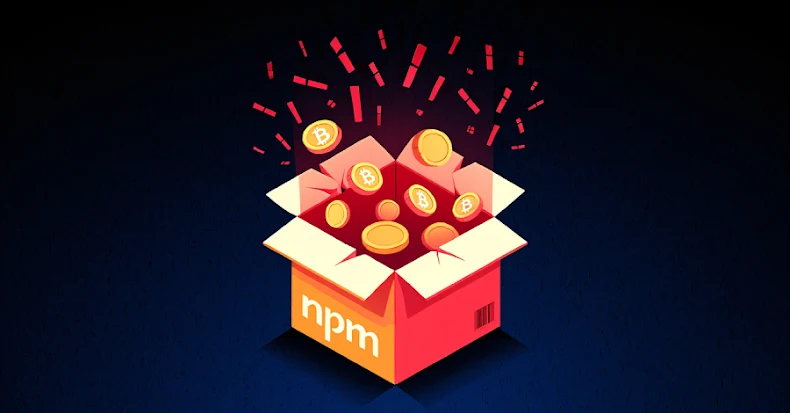
Cybersecurity researchers have discovered three malicious npm packages that are designed to deliver a previously undocumented malware called NodeCordRAT.

The names of the packages, all of which were taken down as of November 2025, are listed below. They were uploaded by a user named “wenmoonx.”

“The bitcoin-main-lib and bitcoin-lib-js packages execute a postinstall.cjs script during installation, which installs bip40, the package that contains the malicious payload,” Zscaler ThreatLabz researchers Satyam Singh and Lakhan Parashar said. “This final payload, named NodeCordRAT by ThreatLabz, is a remote access trojan (RAT) with data-stealing capabilities.”

NodeCordRAT gets its name from the use of npm as a propagation vector and Discord servers for command-and-control (C2) communications. The malware is equipped to steal Google Chrome credentials, API tokens, and seed phrases from cryptocurrency wallets like MetaMask.

According to the cybersecurity company, the threat actor behind the campaign is assessed to have named the packages after real repositories found within the legitimate bitcoinjs project, such as bitcoinjs-lib, bip32, bip38, and bip38.

Both “bitcoin-main-lib” and “bitcoin-lib-js” include a “package.json” file that features “postinstall.cjs” as a postinstall script, leading to the execution of “bip40” that contains the NodeCordRAT payload.

The malware, besides fingerprinting the infected host to generate a unique identifier across Windows, Linux, and macOS systems, leverages a hard-coded Discord server to open a covert communication channel to receive instructions and execute them –

  • !run, to execute arbitrary shell commands using Node.js’ exec function
  • !screenshot, to take a full desktop screenshot and exfiltrate the PNG file to the Discord channel
  • !sendfile, to upload a specified file to the Discord channel

“This data is exfiltrated using Discord’s API with a hardcoded token and sent to a private channel,” Zscaler said. “The stolen files are uploaded as message attachments via Discord’s REST endpoint /channels/{id}/messages.”


Source

computer security cyber attacks cyber news cyber security news cyber security news today cyber security updates cyber updates data breach hacker news hacking news how to hack information security network security ransomware malware software vulnerability the hacker news
Share. Facebook Twitter Pinterest LinkedIn Tumblr Email
Previous ArticleCISA Closes Ten Emergency Directives After Federal Cyber Reviews
Next Article California Shuts Down Health Data Resales By Unregistered Brokers
Team-CWD
  • Website

Related Posts

News

New CISA Guide Helps Agencies Adopt SASE For Zero Trust

June 25, 2026
News

Microsoft Confirms RoguePlanet Defender Zero-Day, Says Patch is in Development

June 25, 2026
News

Trust in Automated AI Vulnerability Scanning Collapses to 9%

June 25, 2026
Add A Comment
Leave A Reply Cancel Reply

Latest News

North Korean Hackers Turn JSON Services into Covert Malware Delivery Channels

November 24, 202522 Views

macOS Stealer Campaign Uses “Cracked” App Lures to Bypass Apple Securi

September 7, 202517 Views

North Korean Hackers Target Crypto Firms with ClickFix and Zoom Lures

April 29, 202610 Views

Why SOC Burnout Can Be Avoided: Practical Steps

November 14, 20259 Views

Cyber M&A Roundup: Cyber Giants Strengthen AI Security Offerings

December 1, 20258 Views
Stay In Touch
  • Facebook
  • YouTube
  • TikTok
  • WhatsApp
  • Twitter
  • Instagram
Most Popular

North Korean Hackers Turn JSON Services into Covert Malware Delivery Channels

November 24, 202522 Views

macOS Stealer Campaign Uses “Cracked” App Lures to Bypass Apple Securi

September 7, 202517 Views

North Korean Hackers Target Crypto Firms with ClickFix and Zoom Lures

April 29, 202610 Views
Our Picks

A phishing attack that doesn’t steal your password

June 15, 2026

Fixing trivial passwords is as easy as 123456

May 7, 2026

Beware of Winter Olympics scams and other cyberthreats

February 2, 2026

Subscribe to Updates

Get the latest news from cyberwiredaily.com

Facebook X (Twitter) Instagram Pinterest
  • Home
  • Contact
  • Privacy Policy
  • Terms of Use
  • California Consumer Privacy Act (CCPA)
© 2026 All rights reserved.

Type above and press Enter to search. Press Esc to cancel.