


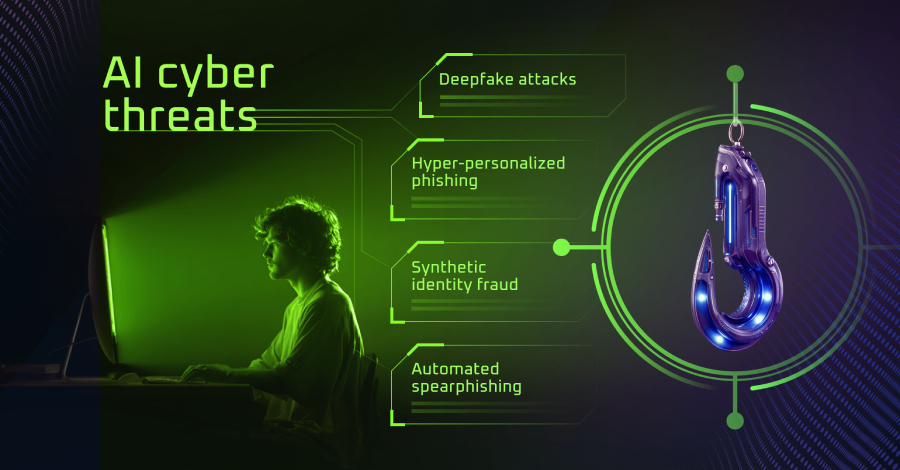
Phishing has always been a numbers game. AI has turned it into a volume machine.
Attackers can now create convincing emails, fake login pages, and tailored lures in minutes. Every polished message adds another case for Tier 1 to review, another link to inspect, and another alert that cannot be dismissed at a glance.
As the queue grows, a credential theft attempt or malware delivery can easily get buried among routine checks. SOC leaders need to help their teams cut through the noise faster and catch the alerts that could turn into a serious incident.
Where Tier 1 Teams Lose Time on AI Phishing
AI helps attackers launch more convincing campaigns, vary the message, and rotate infrastructure faster. For Tier 1 teams, that means fewer alerts can be ruled out quickly.
That leaves Tier 1 spending more time on every alert and sending more unclear cases to Tier 2 for another round of review. As the backlog grows, critical threats can sit in the queue longer, delaying response and increasing the risk of a costly incident.
The Fastest Way to Handle AI Phishing at Scale Without Overloading Tier 1
Adding more manual checks will not solve the problem. When phishing volume rises, Tier 1 needs a way to investigate more alerts without spending extra time on repetitive steps or pushing every unclear case to senior teams.
A faster workflow combines automated checks, behavior-based visibility, and ready-made reports. This gives Tier 1 the evidence needed to reach a clear verdict sooner and helps Tier 2 step in only when a case truly requires deeper investigation.
1. Give Tier 1 Full Behavior Visibility in Under 60 Seconds
AI makes it easier for attackers to produce polished lures and launch new variations faster than reputation checks can keep up. Even when the message looks convincing and the URL has no known history, Tier 1 still needs a quick way to see what happens after the click.
With solutions like ANY.RUN’s Interactive Sandbox, teams can open suspicious links in a real browser environment, interact with the page freely, and trace the full attack chain without putting company devices or infrastructure at risk.
Explore real-world phishing analysis
 |
| Fake Microsoft 365 login page exposed in 60 seconds inside ANY.RUN sandbox |
In this recent case, a routine-looking LinkedIn Drive link led to a fake Microsoft 365 login page designed to steal corporate credentials. The phishing content was hosted on AWS CloudFront and filtered out free email domains, helping it stay under the radar. Inside the sandbox, the full chain was exposed in under 60 seconds.
For a busy Tier 1 team, this changes the workflow immediately:
- Expose what reputation checks cannot see: Redirects, hidden pages, and credential-harvesting forms are revealed in one session.
- Reach a verdict on fresh URLs faster: Even when a link has no known history, the team can see what happens after the click.
- Reduce the time real threats stay unresolved: Credential theft attempts and malicious downloads can be confirmed before they remain buried in the queue.
- Make decisions based on evidence, not assumptions: Tier 1 sees the full attack chain before deciding whether to close or escalate the case.
2. Process More Phishing Alerts Without Adding More Manual Work
Traditional automation can miss phishing pages that appear only after a redirect, a CAPTCHA, or a specific user action. It may save time on basic checks but still leave Tier 1 teams with incomplete results and more cases to investigate manually.
ANY.RUN combines automation with interactivity. Once enabled, the sandbox opens suspicious links in an isolated browser, navigates through pages, solves CAPTCHAs, and triggers hidden steps in the phishing chain, much like an analyst would during a manual investigation. Team members can also step in at any point when a case needs a closer look.
 |
| ANY.RUN sandbox automatically solves CAPTCHA challenge |
This helps SOCs handle higher alert volume without putting more pressure on the team:
- Cut repetitive investigation steps: The sandbox navigates pages, solves CAPTCHAs, and triggers hidden content automatically.
- Increase Tier 1 capacity: The same team can process more AI phishing alerts during each shift.
- Absorb spikes without immediately adding headcount: Automation reduces the amount of hands-on work required for every case.
- Keep human judgment available for complex threats: Analysts can step into the session whenever a case needs closer review.
3. Give Tier 2 Ready-Made Reports for Faster Response
Even after Tier 1 confirms a threat, the escalation can still take time. When findings are scattered across different tools, senior team members have to repeat the same checks before deciding what to do next.
ANY.RUN’s Tier 1 Report gives the team a clear, ready-to-use handoff as soon as the analysis is complete. It brings together the verdict, key IOCs, behavioral indicators, and MITRE ATT&CK mapping. AI Summary explains what happened and why the activity is malicious, while AI Recommendations suggest the next investigation and response steps.
 |
| ANY.RUN’s Tier 1 Report with analysis details, including AI Summary and Recommendations for deeper research and faster handoff |
Instead of passing raw technical data to Tier 2, Tier 1 can send a structured report that is already useful for escalation and faster action.
This improves the handoff between triage and response:
- Prevent Tier 2 from rebuilding the case: Senior teams receive the verdict, IOCs, behavioral findings, and MITRE ATT&CK mapping in one report.
- Cut the delay between triage and containment: Clear findings and recommended next steps help the response team act sooner.
- Standardize escalations across shifts: Every handoff follows the same structure, reducing gaps when cases move between team members.
- Give SOC leaders better oversight: Managers can spot bottlenecks, review escalation quality, and see where the team is losing time.
Turn Faster Phishing Triage into Stronger Business Protection
AI phishing is not only creating more alerts. It is keeping SOC teams busy while real threats move closer to the business.
The teams getting ahead of the problem are giving Tier 1 a faster way to confirm threats, close routine cases, and escalate the right incidents with the evidence already prepared.
Teams using ANY.RUN report:
- 94% of users report faster triage and clearer decisions
- Up to 20% decrease in Tier 1 workload
- 30% fewer Tier 1-to-Tier 2 escalations
- Up to 21 minutes faster MTTR per case
Reduce Tier 1 overload with ANY.RUN and give your SOC more capacity to contain high-risk threats before they disrupt operations or lead to costly incidents.

